Visit 7 North Dental Today Or Call: 602-230-0811

Can Dentists Use Invisalign With Crowns or Implants? A Phoenix Dentist’s Guide

Yes, with proper dental planning.
Invisalign aligners can be an excellent option for straightening teeth, even if you already have dental crowns or implants, but success depends on careful evaluation and treatment planning by an experienced dentist. Misaligned teeth can affect confidence, oral hygiene, and long-term dental health, and Invisalign offers a discreet, modern way to address these concerns. However, when restorations like crowns or implants are involved, dentist-led care becomes essential.
At 7 North Dental, Invisalign treatment is guided by skilled family dentists who understand how restorations interact with tooth movement. Whether you’re enjoying Phoenix’s vibrant food scene or spending time outdoors at the Desert Botanical Garden, a healthy, straight smile enhances every experience, regardless of your dental history.
If you’re considering Invisalign and already have crowns or dental implants, this guide explains how dentists evaluate your case, what limitations exist, and how treatment is customized safely and effectively.
Why Invisalign With Crowns or Implants Requires a Dentist’s Expertise
Invisalign works by applying gentle, controlled pressure to natural teeth over time. Crowns and implants change how that pressure must be planned and applied.
A dentist plays a critical role by:
- Evaluating the health of teeth with crowns
- Confirming implant stability and position
- Determining which teeth can safely move
- Designing a treatment plan that protects existing restorations
Unlike mail-order aligners or DIY orthodontic options, Invisalign treatment involving crowns or implants must be dentist-led to prevent damage, discomfort, or failed outcomes.
Meet the Dentists Guiding Invisalign Care in Phoenix
Dr. Chadwick Brady, DMD

Dr. Chadwick Brady is a trusted family dentist in Phoenix, AZ, with a strong background in science and technology and a patient-focused approach to care. Raised in a family of engineers, Dr. Brady developed an early appreciation for precision and problem-solving. He earned his Bachelor of Science in Molecular, Cellular, and Developmental Biology from the University of Washington in Seattle.
Can Invisalign Work With Dental Crowns?
Yes, Invisalign can work with dental crowns, but only after a dentist carefully evaluates several important factors.
How Dentists Evaluate Crowns Before Invisalign
Before starting treatment, a dentist will:
- Check whether the crown is securely bonded
- Examine the health of the tooth beneath the crown
- Assess how the crown interacts with neighboring teeth
- Evaluate bite alignment and force distribution
Crowns placed on healthy, stable teeth typically respond well to Invisalign. If a crown is loose or the underlying tooth is compromised, treatment may need to be adjusted or delayed.
How Invisalign Aligners Fit Around Crowns
Invisalign aligners are digitally designed using precise 3D scans of your teeth. Dentists carefully customize the aligners so they fit around crowns without damaging them.
Crowns made from porcelain or ceramic are generally durable enough to withstand the gentle forces applied by Invisalign when treatment is properly planned.
Managing Pressure on Crowns
Aligners work by applying gradual pressure, and dentists closely control the amount of force applied to crowned teeth. This protects both the restoration and the natural tooth underneath.
Routine dental checkups during treatment help ensure crowns remain stable and comfortable throughout Invisalign therapy.
Can Invisalign Work With Dental Implants?
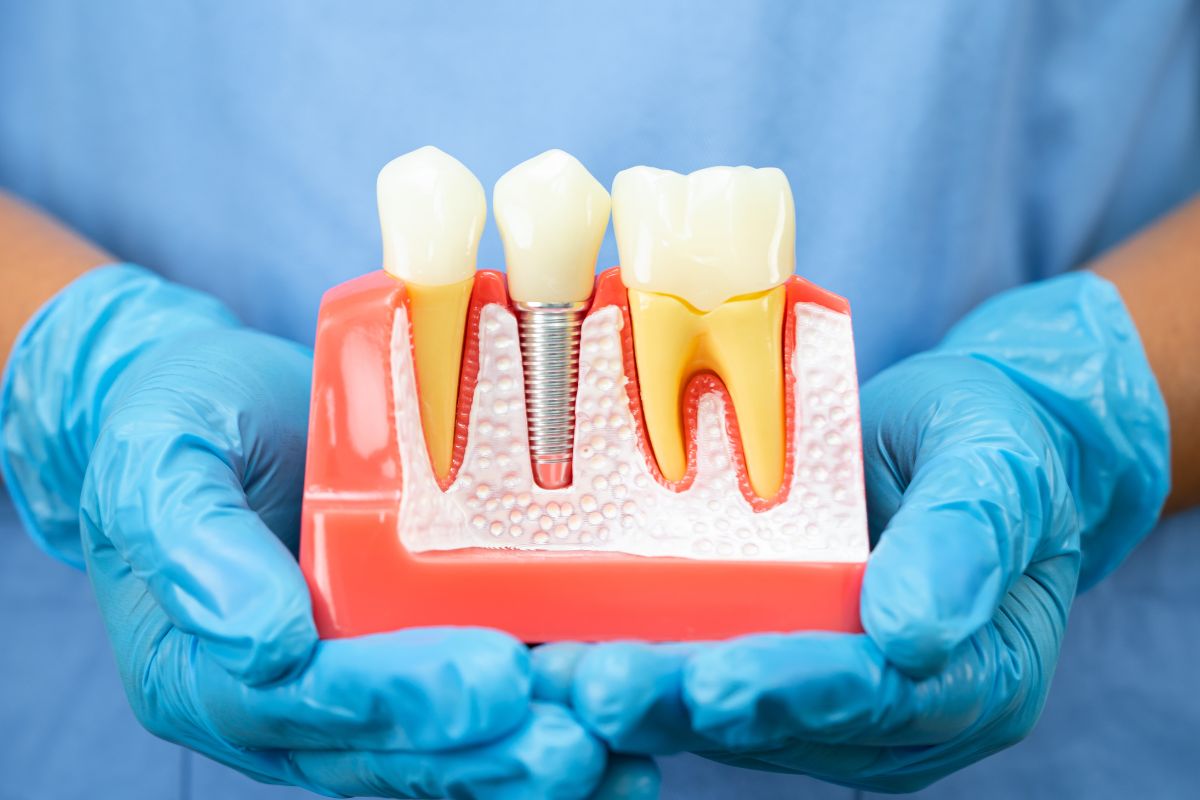
Dental implants require a different approach because implants are anchored directly into the jawbone and do not move like natural teeth.
How Dentists Plan Invisalign Around Implants
Dentists explain to patients that:
- Invisalign cannot move an implant
- Natural teeth around the implant can be aligned
- Implants often serve as stable anchor points
With careful planning, Invisalign can improve alignment and bite balance around existing implants.
Why Implant Position Matters
The success of Invisalign near implants depends heavily on the placement of the implants. Dentists evaluate:
- Whether the implant interferes with planned tooth movement
- Available spacing
- Bite function and balance
If implants are well-positioned, Invisalign can be highly effective in refining the surrounding smile.
Timing Invisalign After Implant Surgery
Dentists typically recommend waiting until implants have fully integrated with the jawbone before beginning Invisalign treatment. Once healing is complete, aligners can safely adjust surrounding teeth.
Key Dentist-Guided Considerations for Invisalign With Restorations
Personalized Treatment Planning
Every patient’s dental history is unique. Dentists create customized Invisalign plans based on:
- Existing crowns or implants
- Bite alignment
- Gum and bone health
- Cosmetic and functional goals
This tailored approach is critical for long-term success.
Ongoing Monitoring by Your Dentist
Invisalign treatment doesn’t end once aligners are delivered. Regular dental visits allow dentists to:
- Monitor crown and implant stability
- Ensure aligners fit correctly
- Make adjustments if needed
This ongoing care is especially important for complex cases.
Invisalign With a Missing Tooth
Patients often ask whether Invisalign works with a missing tooth. Dentists may recommend:
- Aligning teeth first, then placing an implant
- Creating space with aligners for future restoration
Your dentist will guide the sequence for the safest and most effective results.
Why Phoenix Patients Choose Dentist-Led Invisalign
- Comfort: Smooth, removable aligners
- Lifestyle-friendly: Easy to remove for meals and social events
- Efficiency: Often shorter treatment times than traditional braces
- Professional oversight: Reduced risk of complications
Whether hiking Camelback Mountain or enjoying downtown Phoenix, Invisalign fits seamlessly into daily life.
What Patients Say About Our Dentists
Real patient experiences reflect the quality of care, comfort, and trust our dentists provide – showing why so many patients choose us for Invisalign and restorative treatment.
“I had a great first visit at 7 North Dental! The entire team was welcoming and professional, and the appointment felt very thorough. They took the time to explain what they were seeing, answered all of my questions, and clearly walked me through what my dental plan will look like moving forward. I really appreciated how transparent and informative they were.” – A. Marcano
Still not convinced? Check out more such reviews and patient experiences with 7 North Dental.
Is Invisalign Right for You?
You should schedule a consultation with a dentist if you:
- Have dental crowns and want straighter teeth
- Have implants and shifting natural teeth
- Are you searching for Invisalign in Phoenix
- Want a professionally guided treatment plan
Invisalign Success Starts With the Right Dentist
Invisalign can work safely and effectively with dental crowns and implants, but only when treatment is guided by an experienced dentist. Proper planning ensures that aligners improve alignment without compromising existing restorations.
At 7 North Dental, Invisalign treatment is led by knowledgeable family dentists who take a personalized, technology-driven approach. Whether you have crowns, implants, or a complex dental history, your smile is in capable hands.
Schedule your Invisalign consultation today and take the first step toward a healthier, straighter smile guided by trusted Phoenix dentists. You can also call us at: 623-385-8709 to get immediate assistance.
FAQs
Q. Can I use Invisalign if I have a missing tooth?
A: Yes, this treatment can work with a missing tooth. Aligners can help reposition the surrounding teeth to fill the gap and prepare for an implant or bridge.
Q. Will Invisalign work with my dental crown?
A: As long as your dental crown is securely in place and the underlying tooth is healthy, clear aligners for teeth can help align your smile around the crown.
Q. How long does Invisalign treatment take if I have implants?
A: The length of this treatment depends on your specific case. For those with implants, the treatment plan will be customized to ensure the surrounding teeth are properly aligned.
Q. Can Invisalign be used with crowns and implants at the same time?
A: Yes, transparent aligners can be used with both crowns and implants, provided the implants are in place and the crowns are stable. Your dentist will monitor your progress to ensure the aligners are working effectively.
Q. How often should I visit my dentist during this treatment with crowns or implants?
A: Regular visits are essential to check the fit of your transparent aligners and ensure your crowns or implants remain intact. Typically, checkups are recommended every 6-8 weeks.